We provide legal representation for individuals and businesses affected by the oil spill.
This includes those experiencing physical exposure, environmental damage, property loss, or financial impacts such as lost income, reduced operations, or increased expenses.
Our goal is to help clients pursue full and fair compensation for the damages they’ve suffered.
As part of that effort, the Louisiana Coastal Claims Coalition is the only group with biologists actively on the water, conducting testing to define the full scope and extent of the damages.
The 2026 LOOP OIL SPILL AT THE LOUISIANA OFFSHORE OIL PORT RELEASED THOUSANDS OF GALLONS OF CRUDE OIL INTO THE GULF, IMPACTING COASTAL WATERS AND COMMUNITIES ACROSS LOUISIANA.
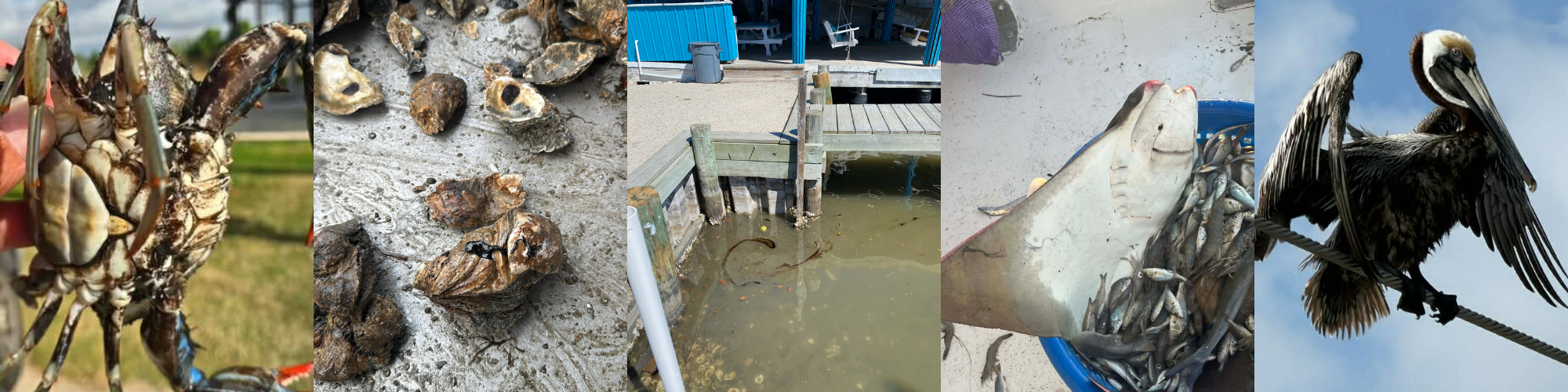
The LOOP oil spill has had far-reaching impacts across coastal Louisiana, affecting:
SEAFOOD PROCESSORS
OYSTER LEASE OWNERS
OYSTER FISHERMAN
SHRIMPERS
CRABBERS
DECKHANDS
LAND OWNERS
RESTAURANTS
PHYSICAL INJURIES
EVEN IF YOUR PROPERTY WASN'T DIRECTLY IMPACTED BY VISIBLE OIL CONTAMINATION, YOU MAY STILL BE ELIGIBLE TO A VALID CLAIM.

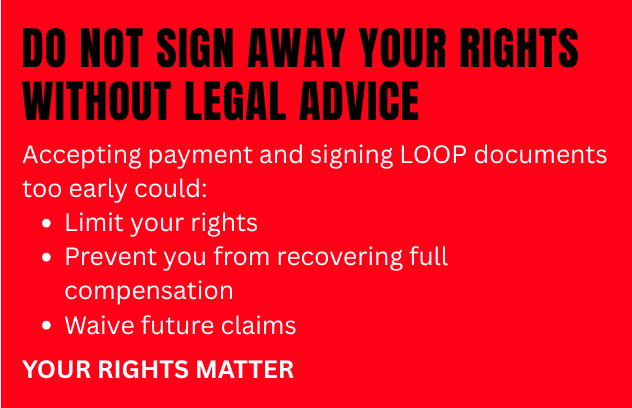
HOW OIL SPILL CLAIMS DIFFER FROM STANDARD INSURANCE CLAIMS
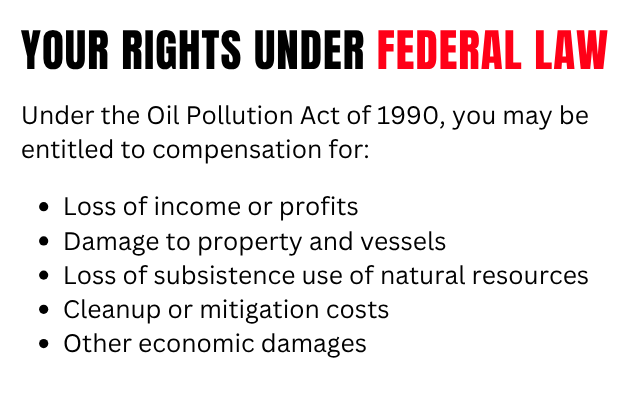
Under federal law, including the Oil Pollution Act (OPA), you may have access to:
-A claim against the responsible oil company
These cases often involve overlapping responsibilities, strict filing requirements, and disputes over coverage and liability, making them more involved than standard insurance claims.
Our firm manages the legal process for you, working to identify all available sources of recovery while you focus on protecting your property and moving forward.
Oil spill liability in the United States is governed primarily by the Oil Pollution Act of 1990 (OPA 90), a federal law that places strict responsibility on parties involved in oil transportation, storage, and operations.
This legal framework determines who may be held liable after a spill and outlines the scope of recoverable damages, including cleanup costs, environmental harm, and economic losses.
The Legacy of the Oil Pollution Act of 1990
In 1989, the tanker Exxon Valdez grounded on Bligh Reef, Alaska resulting in the spill of more than 11 million gallons of oil into Prince William Sound. The resulting ecological disaster galvanized Congress to enact the Oil Pollution Act the next year. This legislation has had far-reaching implications for the carriage of oil by ship, enforcement actions against responsible parties, funding to respond to spills nationwide, and the protection of the U.S. marine environment [READ MORE]
Navigating Liability Under the Oil Pollution Act of 1990 (OPA 90): How Being a Responsible Party Impacts Your Business
Understanding how OPA 90 defines a “responsible party” is essential for businesses and individuals involved in the energy and maritime industries, as it directly impacts financial exposure, insurance coverage, and legal obligations following an oil spill event [READ MORE]
LOUISIANA OIL SPILL COMMUNITY MEETINGS
If you or your livelihood has been impacted by the recent oil spill, we’re here to help.
Join us at one of our FREE upcoming community meetings to get answers, guidance, and the support you deserve.
Our team will be available to walk you through your rights and next steps.
We encourage all fishermen, shrimpers, oystermen, crabbers, and seafood industry workers to attend.
Our events are free to the public.
Come out, stay informed, and be part of the conversation.
Follow us on Facebook for the latest news and events.
LOUISIANA OIL SPILL COMMUNITY MEETINGS
If you or your livelihood has been impacted by the recent oil spill, we’re here to help.
Join us at one of our FREE upcoming community meetings to get answers, guidance, and the support you deserve.
Our team will be available to walk you through your rights and next steps.
We encourage all fishermen, shrimpers, oystermen, crabbers, and seafood industry workers to attend.
Our events are free to the public and meals are provided.
Come out, stay informed, and be part of the conversation.
Follow us on Facebook for the latest news and events.